Research note
Dedicated IP or Shared IP: Which is Better for You?

As you probably know, an essential part of how devices communicate on networks is the Internet Protocol (IP). From browsing your favorite web pages to watching videos or sending emails, IP addresses are essential in every action on the Internet.
What is website IP? It’s a unique numerical label assigned to a website's server, allowing devices to locate and interact with it. It is provided by your Internet Service Provider (ISP) and consists of a series of numbers separated by periods, identifying the specific Internet connection being used.
And next, you've also likely heard of ‘dedicated IP vs. shared IP,’ haven’t you? Whether or not you’ll find my deep analysis pretty helpful, I promise!
What is a Shared IP Address?

A shared IP address means it’s used by several websites or services running on the same server. It is prevalent in shared IP address hosting situations when multiple clients use the same server resources to cut expenses.
Key Features
Cost-effectiveness
The shared type is commonly connected with shared hosting plans, which are less expensive than hosting dedicated IP solutions. It makes them excellent for small enterprises, personal blogs, and moderately trafficked websites.
Resource Sharing
Multiple websites or services use the same server resources, such as CPU, memory, and bandwidth. If your requirements are moderate to minimal, I recommend you consider this option, given that it enables hosting companies to minimize resource consumption while maintaining competitive pricing.
Imperfect Security and Management
While this type can save money, it can also pose security and management issues. Because several sites use the same server address, a security breach on one site could possibly affect others.
Positives & Negatives
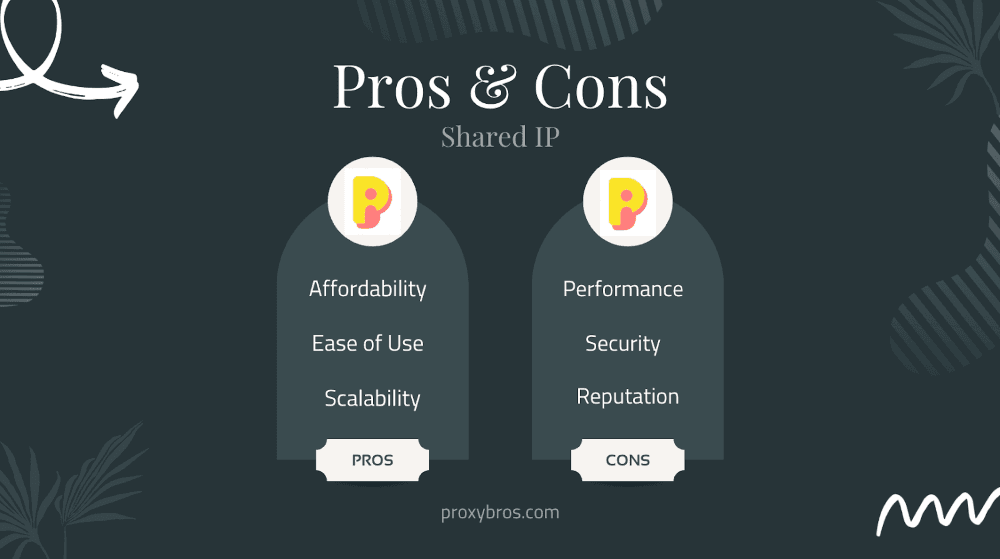
It is cheaper, so if you manage a smaller website, go for it because it also comes with a simplified setup and maintenance. Besides, as your website grows, you’ll be able to easily upgrade hosting plans without changing addresses.
However, keep in mind that sharing resources with other websites can lead to slower performance, especially during peak traffic. I’d also highlight an increased risk in case another site on the shared server is compromised: it could impact the server’s reputation, potentially leading to email deliverability issues, albeit you can manage it with proper security measures.
What’s a Dedicated IP?

A dedicated IP meaning says it’s an Internet Protocol (IP) address that is only issued to one website or business. Unlike the shared type, used by several websites hosted on the same server, a dedicated IP address is assigned to a single user.
Key Features
Exclusivity
This type of address is unique to your website or service, meaning no other websites can share it. This exclusivity can provide better control and security.
Enhanced Performance
Your website's performance can be more stable and predictable. Plus, you are less likely to be affected by other websites' traffic or resource usage.
Direct Access
It can help access your site or server without relying on a domain name, especially during domain name system (DNS) changes or issues.
Improved Email Deliverability
While shared addresses may be blacklisted if another user participates in spamming behavior, the dedicated type can instead increase email delivery rates.
SSL Certificates
Although modern technologies like Server Name Indication (SNI) have enabled SSL certificates with shared IPs, some older systems and applications still require a dedicated address for SSL.
Compliance and Security
I’ve repeatedly encountered specific industries and regulations that require a dedicated type for compliance purposes. Therefore, it can also enhance security by allowing for more granular control over access and firewall rules.
As you can see, the list of benefits of a dedicated IP is relatively longer, but don’t rush to conclusions, read on!
Positives & Negatives
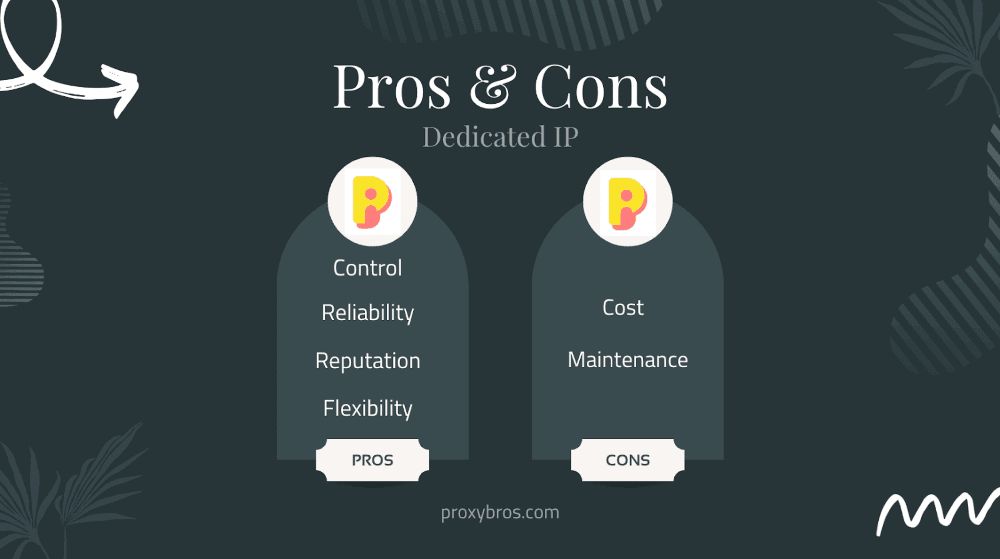
Personally, I always opt for the dedicated type cause it provides me with complete control over my server: by all means, do I try to avoid any effects from other people's activities. Besides, it provides more constant and reliable performance and even more control over the reputation, which is critical for me since I’m engaged in email marketing and communications. Additionally, maintaining and setting up complicated server settings and apps that may need a dedicated address was easier, even for my not-that-tech-savvy assistant.
However, yep, the price is usually higher – the exclusivity does cost some money. And even if your assistant isn’t advanced in tech, you better should be as overall managing this type of address may involve more technical knowledge and upkeep.
Shared IP vs Dedicated IP – Major Differences
In terms of reputation, I must admit that these days, search engines rely more on content quality and relevance rather than the type of IP used. Nevertheless, you still must know the primary distinctions:
Control: You do have it when using a dedicated address due to exclusivity, and you lack it in shared cases (you cannot control any activities by others.)
Reputation: Same here – if you manage and control the server, you’re the one responsible for reputation. Once you share the address, you are to only share the influence on reputation along with others, and that, more often than not, means, well, issues.
Performance: Dedicated IP, undoubtedly, offers more consistent performance, whereas other users affect a shared one’s performance as well as its fluctuations.
Cost: This is, I guess, the only difference in bringing some scores for shared addresses, as they’re cheaper.
Which is Better to Choose for Website & SEO?
I’d say that a dedicated IP is the better option if you require enhanced security, control, and consistent performance. Should your business handle sensitive data or engage in regulated industries, this server choice provides a stable environment with less risk of being affected by others' activities. Its improved email deliverability and direct access capabilities also make it a strong choice for professional and high-traffic websites.
On the other hand, though, I could also recommend a shared IP as a practical and budget-friendly solution for small businesses, startups, and personal blogs. All in all, it’s not a bad way to reduce costs while still providing adequate performance for sites with moderate traffic. Shared IPs are generally sufficient for SEO, as search engines now prioritize content quality and relevance much more. And remember that hosting providers' security measures can address most concerns about shared server risks.
Conclusion
So, to sum it up, Internet Protocol addresses are essential for online connectivity, provided by ISPs to uniquely identify internet connections. A dedicated IP offers exclusive control over resources, which is ideal for businesses that need high security and stable performance. In contrast, a shared address is cost-effective, sharing resources among multiple users yet potentially varying in performance and security.
FAQ
What is IP?
IP (Internet Protocol) is a unique number that ISPs provide to devices connected to the Internet, allowing communication and data transfer.
How does a dedicated IP differ from a shared one?
The former is only issued to one person or website, providing greater control and protection. Multiple websites use a shared address, which shares resources and costs.
What are the advantages of a dedicated IP address?
It provides greater security, reliable performance, direct IP access, improved email deliverability, and simplified SSL management.
What are the benefits of using a shared IP address?
These include cost-effectiveness, resource pooling, scalability, and sufficient performance for small businesses and personal websites.
How does IP type affect website SEO?
Given that search engines focus on content quality and relevancy in the first place, it does not directly impact SEO. However, in some competitive niches, dedicated IPs might still be preferred for their perceived reliability.
Which IP type is right for my website?
I advise you to choose a dedicated type for high security, compliance, and consistent performance. Or, you may go for a shared solution to reduce costs while retaining acceptable performance and SEO efficiency.